International Day of the Victims of Enforced Disappearances
Introduction
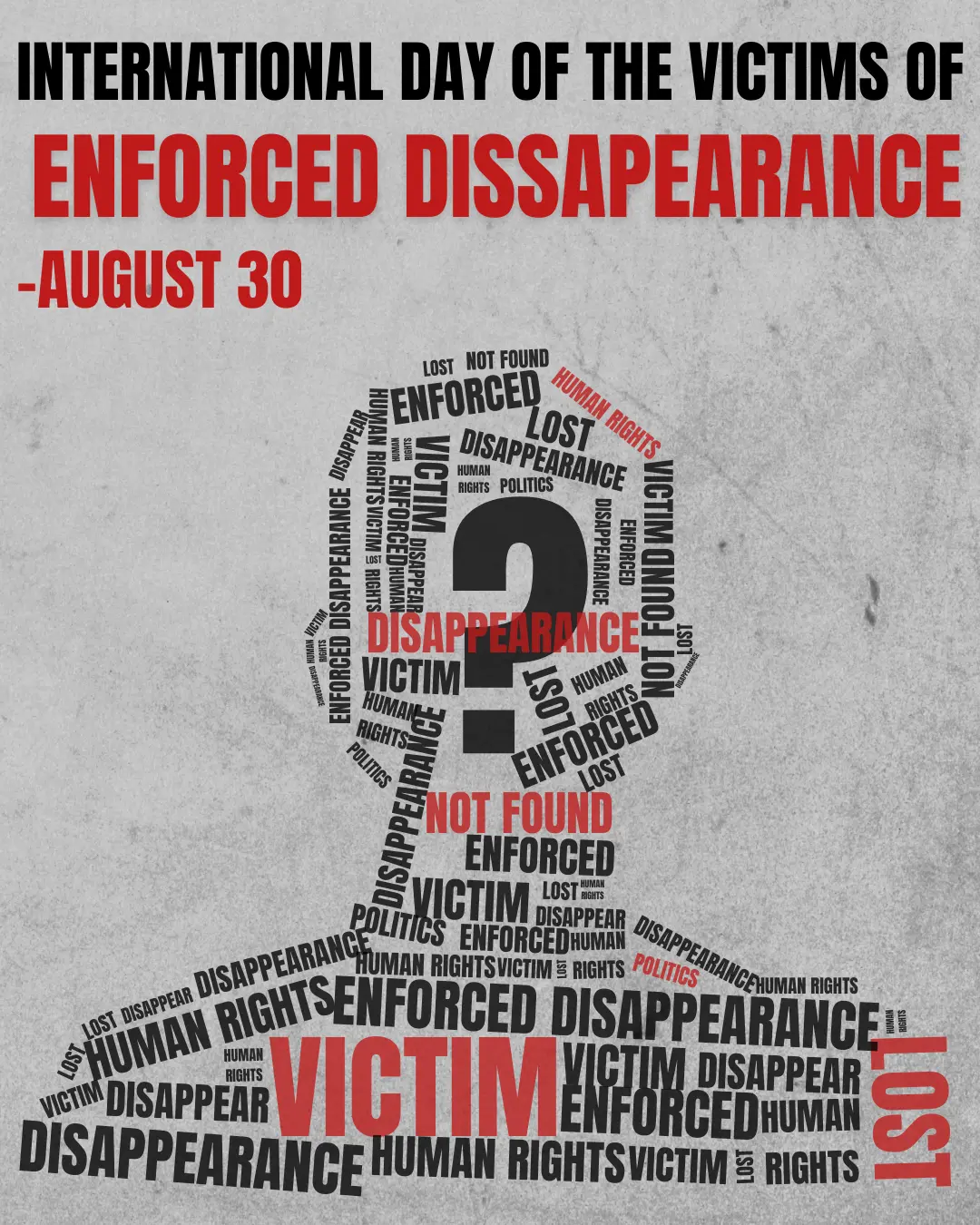
International Day of Victims of Enforced Disappearances occurs on August 30th. This day honors people who have forcibly disappeared. It calls for justice and accountability globally. Thousands of cases remain unresolved worldwide.
| Date | 30 August |
| Duration | One day |
| Celebrated In | Countries worldwide |
| Observing Communities | Human rights groups, advocacy organizations, governments |
| Type of Event | International Human Rights Awareness |
| Purpose of Event | To raise awareness about enforced disappearances and support victims’ families |
| First Observed In | 2011 |
| Holiday Status | No holiday is provided |
Celebration and Observance Around the World
Enforced Disappearances Day is observed by human rights organizations. Governments and civil society participate in remembrance activities. Over 150 countries recognize this important human rights day. Millions of people work toward justice and accountability.
International Organizations Coordinate Justice Advocacy Efforts:
-
UN agencies promote accountability mechanisms globally
-
Human rights organizations gather evidence and testimonies
-
International courts pursue prosecutions of perpetrators
-
Truth commissions investigate and document disappearances
-
NGOs support families seeking justice and answers
Families and Communities Remember Disappeared Persons:
-
Vigils and memorials honor disappeared individuals
-
Family organizations share personal stories and losses
-
Demonstrations demand justice and accountability
-
Candle lighting ceremonies commemorate victims
-
Community gatherings build solidarity and support
Governments Strengthen Accountability and Prevention Mechanisms:
-
Legal reforms establish stronger protections against disappearance
-
Law enforcement investigates historical disappearance cases
-
Justice systems prosecute perpetrators of disappearances
-
Compensation programs support affected families
-
Prevention protocols prevent future disappearances
Media Coverage Highlights Justice and Truth Seeking:
-
Documentaries expose enforced disappearance patterns
-
News outlets cover prosecutions and court cases
-
Investigative journalism reveals historical disappearances
-
Social media shares family stories and demands
-
Online platforms amplify justice advocacy messages
History and Origin of Enforced Disappearances Awareness Day
Enforced Disappearances Day emerged from advocacy movements. The UN officially introduced this observance in 2010. August 30 was chosen for its symbolic meaning. This day recognizes decades of justice advocacy efforts.
Important Historical Milestones in Justice Advocacy:
Disappearances occurred across twentieth century conflicts. Latin America experienced widespread disappearances from dictatorships. Southeast Asia documented disappearances during the war. Argentina's "Dirty War" disappeared thousands of people. Truth commissions investigated and documented disappeared persons. International courts began prosecuting perpetrators slowly. DNA identification helped identify the remains of a disappeared person. Transitional justice mechanisms addressed historical violations. Modern accountability efforts continue expanding worldwide. Future justice depends on sustained commitment.
Timeline of Enforced Disappearances and Justice Development:
-
1970s-1980s: Latin American dictatorships disappear thousands
-
1992: UN Declaration on Enforced Disappearances adopted
-
1994: International Disappearances Convention opened for signature
-
2000: Truth commissions investigate disappeared persons
-
2010: UN General Assembly proclaims August 30 observance
-
2011: First official global awareness day celebration
-
2015: Enhanced International Criminal Court prosecutions
-
2020: Modern cases continue in multiple regions
-
2023: Ongoing prosecutions and transitional justice efforts
Evolution Over Time:
Early disappearances lacked international attention. Families struggled for decades without information. Documentation efforts began in the 1980s and 1990s. Truth commissions investigated disappeared person cases. International courts gradually expanded jurisdiction. DNA technology enabled victim identification. International accountability mechanisms strengthened gradually. Transitional justice frameworks have been developed and improved. Families continue seeking answers decades later. Justice processes have become more systematic. Future prosecutions will continue addressing historical crimes.
Social and Educational Value of Justice Advocacy
Enforced Disappearances Day educates about human rights. This day promotes justice and accountability. Public awareness strengthens the prevention of future violations. Recognition of victims builds societal healing.
Justice Processes Help Families Achieve Closure:
-
Finding remains enables proper burial and ceremonies
-
Information about fates provides emotional closure
-
Accountability provides a sense of justice achieved
-
Compensation recognizes the victim's suffering and loss
-
Public acknowledgment validates family experiences
Accountability Deters Future Human Rights Violations:
-
Prosecutions send clear messages about consequences
-
International courts establish powerful precedents
-
Perpetrators face accountability for crimes
-
Prevention mechanisms strengthen globally
-
Societies commit to preventing future violations
Truth Documentation Preserves Historical Memory:
-
Investigations preserve accurate historical records
-
Testimonies document human experiences and suffering
-
Archives provide evidence for future generations
-
Historical records prevent denial and revisionism
-
Memory preservation strengthens transitional justice
Career Development in Human Rights and Justice:
-
Human rights lawyers build justice advocacy careers
-
Investigators specialize in disappearance case research
-
Psychologists support trauma survivors and families
-
Archivists preserve historical evidence and testimony
-
Journalists document accountability efforts
Do's and Don'ts for Enforced Disappearances Awareness Day
Do's:
-
Support transitional justice mechanisms and efforts
-
Educate yourself about the cases of disappeared persons
-
Participate in remembrance and advocacy events
-
Support families seeking justice and answers
-
Advocate for the prosecution of perpetrators
Don'ts:
-
Don't forget about the disappeared persons and cases
-
Don't minimize the suffering of affected families
-
Don't support perpetrators or deny disappearances
-
Don't ignore ongoing disappearances currently
-
Don't exploit victims' stories disrespectfully
-
Don't obstruct justice investigations and processes
Conclusion
International Day of Victims of Enforced Disappearances honors the lost persons. This day promotes justice and accountability efforts. Truth-seeking strengthens communities and healing. Recognition of victims validates their experiences. Justice processes deter future violations. Together, we can support affected families. Accountability serves historical justice needs. Prosecutions demonstrate rule of law principles.
Supporting justice helps families achieve closure. Let us commit to finding truth and justice.