World Poetry Day
Introduction
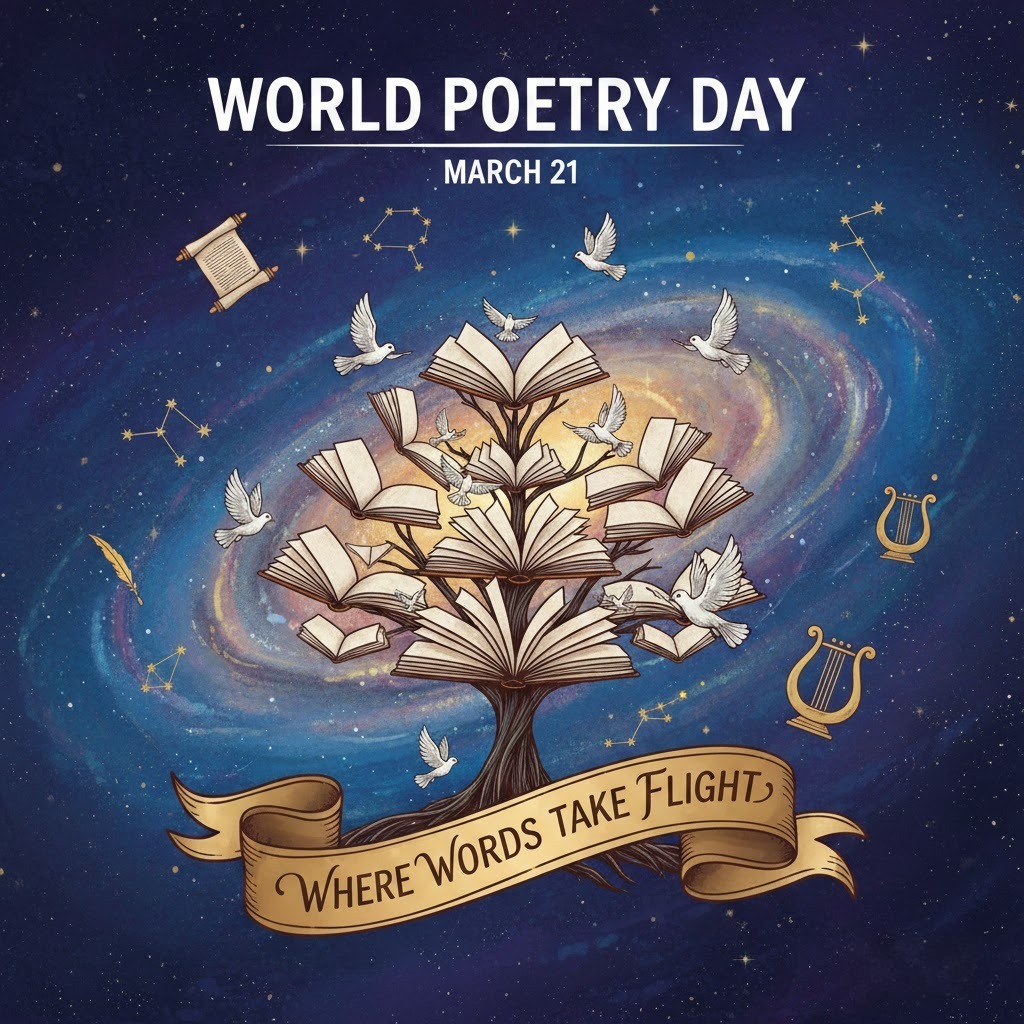
World Poetry Day is celebrated every year on March 21st. UNESCO established this day in 1999 to honor poetic expression. It celebrates poetry's unique ability to capture human experience. The date coincides with the spring equinox in the Northern Hemisphere.
| Date | 21 March |
| Duration | One day |
| Celebrated In | Countries worldwide |
| Observing Communities | Poets, writers, literary organizations, students |
| Type of Event | International / Cultural |
| Purpose of Event | To promote poetry as a powerful medium of expression, storytelling, and documentation |
| First Observed In | 1999 |
| Holiday Status | No holiday is provided |
Celebration and Observance Around the World
World Poetry Day is observed in countries worldwide with UNESCO support. National literary organizations, poets, and schools organize diverse celebrations globally. Poetry represents linguistic and cultural diversity across all continents.
Poetry Readings Bring Verses to Life for Audiences:
-
Libraries and bookstores host open mic poetry reading events
-
Professional poets perform their work at theatres and cultural centers
-
Street poetry events bring verse to public spaces and communities
-
Virtual readings connect global audiences through online platforms worldwide
Educational Programs Introduce Students to Poetry:
-
Schools organize poetry writing workshops and creative exercises
-
Teachers encourage students to read and analyze classic poems
-
Poetry competitions inspire young writers to explore creative expression
-
Guest poets visit classrooms to share their craft and experiences
Publishing Houses Release Special Poetry Collections:
-
New poetry anthologies are launched on March 21 annually
-
Publishers offer discounts on poetry books to increase accessibility
-
Literary magazines feature special poetry editions and emerging poets
-
Online platforms showcase diverse voices from around the world
Social Media Campaigns Share Poetry with Global Audiences:
-
Hashtags like #WorldPoetryDay trend across all social platforms
-
Poets share their favorite verses and original compositions online
-
Literary organizations post daily poems from diverse cultural traditions
-
Video recitations reach millions who might not read poetry otherwise
Awards and Recognition Honor Outstanding Poets:
-
National poetry prizes are announced on or around March 21
-
Lifetime achievement awards celebrate poets' contributions to literature
-
Emerging poet grants support new voices in contemporary poetry
-
Translation awards recognize bringing poetry across language barriers
Regional Celebrations Highlight Local Poetic Traditions:
-
Arab world celebrates its rich heritage of classical and modern poetry
-
Asia showcases haiku, ghazal, and other traditional poetic forms
-
Africa honors oral poetry traditions and contemporary spoken word
-
Europe highlights diverse linguistic and poetic traditions and innovations
-
America celebrate indigenous poetry and contemporary multicultural voices
History and Origin of World Poetry Day
World Poetry Day has important roots in literary advocacy efforts. UNESCO recognized poetry's universal appeal transcending borders and languages. By the late 1990s, digital age threatened traditional arts. International recognition became essential for preserving poetic expression worldwide.
Important Historical Milestones:
1999 — UNESCO Established World Poetry Day:
-
UNESCO's 30th General Conference adopted resolution creating the day
-
March 21 was chosen as date for annual celebration
-
Spring equinox symbolizes renewal, creativity, and new beginnings
-
Goal was to support linguistic diversity through poetic expression
March 21, 2000 — First World Poetry Day Celebrated:
-
Countries worldwide organized readings, competitions, and educational programs
-
Literary organizations embraced the day as platform for promotion
-
Media coverage brought poetry to broader public audiences
-
Day established poetry as living art form relevant to contemporary life
2002 — Digital Poetry Platforms Emerged:
-
Internet enabled global sharing of poetry across borders
-
Online literary magazines made poetry more accessible worldwide
-
Social media began transforming how poetry reaches audiences
-
Digital age renewed interest in poetry among younger generations
2011 — Spoken Word and Performance Poetry Gained Recognition:
-
Poetry slams and spoken word events attracted diverse audiences
-
Performance poetry brought new energy to traditional art form
-
YouTube and social platforms amplified poetry's popular reach
-
Contemporary poets found new ways to engage modern audiences
Present — Poetry Thrives in Digital and Traditional Forms:
-
Instagram poets reach millions with accessible, visual verse
-
Traditional literary journals continue publishing alongside digital platforms
-
Audio poetry and podcasts make verse accessible while multitasking
-
Poetry remains vital form for expressing social, political, personal truths
Evolution Over Time
World Poetry Day began as UNESCO's cultural preservation initiative. It has evolved into vibrant global celebration of expression. Early focus was simply preserving traditional poetic forms and languages. Modern celebrations embrace digital innovation, spoken word, and diverse voices. From literary observance to dynamic celebration of human creativity.
Social and Educational Value
World Poetry Day teaches communities that poetry captures universal experiences. It builds appreciation for linguistic diversity and creative expression. The day promotes poetry as accessible art for everyone.
Poetry Preserves Languages and Cultural Heritage:
-
Ancient epics pass down history through poetic oral traditions
-
Indigenous languages survive through poetry and song preservation
-
Translation makes diverse poetic traditions accessible across cultures
-
Poetry documents social movements and historical moments powerfully
Poetic Expression Develops Cognitive and Emotional Skills:
-
Writing poetry enhances vocabulary, creativity, and language mastery
-
Reading verse develops empathy by exploring diverse perspectives
-
Memorizing and reciting poetry strengthens memory and confidence
-
Analyzing poetry teaches critical thinking and interpretation skills
Poetry Provides Voice for Marginalized Communities:
-
Protest poetry articulates social justice demands and grievances
-
Women poets challenge patriarchy through verse and performance
-
LGBTQ+ poets express identities and advocate for rights
-
Immigrant and refugee poets share displacement and resilience stories
Poetry Makes Literature Accessible to All:
-
Short form makes poetry less intimidating than novels
-
Free verse removes barriers of formal rules and structure
-
Spoken word performances engage audiences who don't read books
-
Social media platforms democratize poetry publication and distribution
Do's and Don'ts for World Poetry Day
Do's:
-
Read poetry from diverse cultures and literary traditions
-
Attend local poetry readings or open mic events near you
-
Write your own poems expressing feelings and observations
-
Share favorite poems on social media with proper attribution
-
Support poets by purchasing their books and attending readings
-
Introduce children to poetry through nursery rhymes and stories
Don'ts:
-
Don't assume poetry is only for literary scholars
-
Don't dismiss contemporary poetry as less valuable than classics
-
Don't plagiarize or share poems without crediting the poet
-
Don't think poetry must rhyme or follow strict rules
-
Don't overlook poetry in translation from other languages
-
Don't assume poetry has no place in modern life
Key Facts About Poetry Worldwide
-
UNESCO established World Poetry Day in 1999 for global celebration
-
March 21 was chosen because it's the spring equinox, symbolizing renewal
-
Poetry exists in every culture and language throughout history
-
The Epic of Gilgamesh, from 2100 BCE, is the earliest known poem
-
Haiku originated in Japan as a 17-syllable poetic form
-
Sonnets contain 14 lines following specific rhyme schemes traditionally
-
Instagram poets reach millions with contemporary, accessible verse