World Newah Day
| Date | March 28, 2026 (last Saturday of March) |
| Duration | 1 day |
| Observance | Ethnic cultural celebration |
| Celebrated in | Globally, especially Newar communities in Nepal and diaspora |
| Observing Communities | Newars worldwide |
| Type of Event | Cultural heritage observance |
| Purpose of Event | To celebrate and preserve Newar cultural identity, language, and heritage globally |
| Holiday Status | No (Not an official public holiday) |
| First Observed in | 2018 (World Newah Organization) |
Quick Fact: The Newars are the indigenous inhabitants of the Kathmandu Valley — Nepal's most ancient documented civilization — who created the extraordinary temples, palaces, and art treasures that define the valley's UNESCO World Heritage Sites. World Newah Day was established in 2018 to celebrate and preserve this remarkable civilization's living cultural legacy, including the Newari language which is classified as an endangered language by UNESCO.
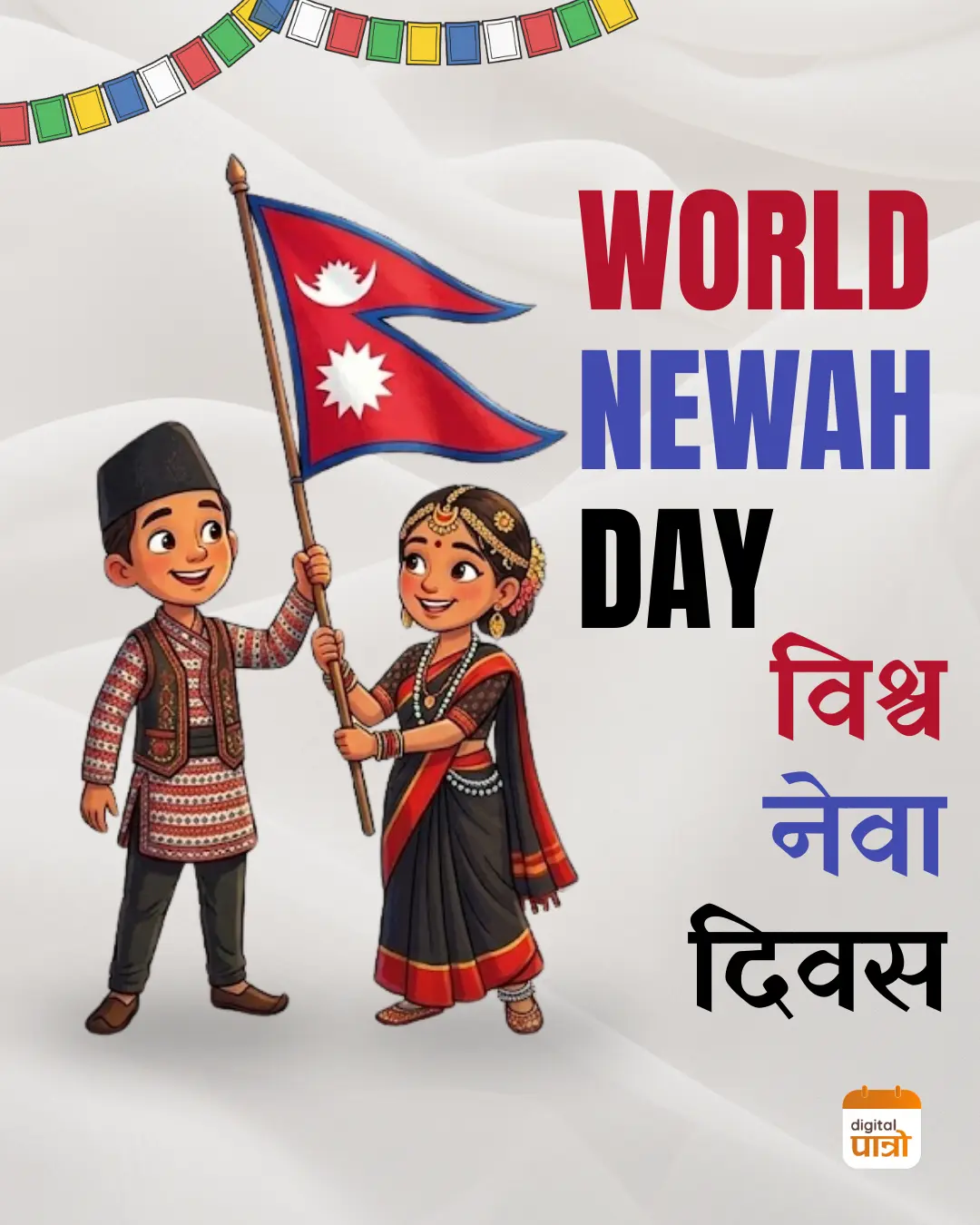
World Newah Day is an annual global celebration of the Newar people — the indigenous inhabitants of Nepal's Kathmandu Valley and one of South Asia's most artistically and culturally accomplished civilizations. Established in 2018 by the World Newah Organization and observed on the last Saturday of March each year, this day brings Newar communities across the world together to celebrate their extraordinary cultural heritage, preserve their endangered language, and affirm their unique identity.
History and Background
The Newars have inhabited the Kathmandu Valley for over two millennia, creating a remarkably sophisticated civilization that produced extraordinary architecture, art, literature, and religious traditions. The valley's UNESCO World Heritage Sites — including the three Durbar Squares of Kathmandu, Patan, and Bhaktapur, plus Swayambhunath and Boudhanath stupas — are testament to Newar genius. The Newari language (Nepal Bhasa) belongs to the Tibeto-Burman language family and has its own ancient script and rich literary tradition. World Newah Organization was established to address the cultural challenges facing Newar communities, including language endangerment and the fragmentation of diaspora communities, and founded World Newah Day in 2018 to create an annual global celebration.
Purpose of World Newah Day
This global celebration is observed to:
-
Celebrate the extraordinary Newar cultural identity and the richness of their heritage worldwide.
-
Preserve and promote the Newari language (Nepal Bhasa) which is classified as endangered.
-
Foster solidarity among global Newar communities in Nepal and the international diaspora.
-
Promote Newari arts, crafts, cuisine, music, and cultural practices to the wider world.
How is World Newah Day Observed?
The day is celebrated with cultural activities:
-
Cultural programs and traditional performances, including Newari music, dance, and drama.
-
Newari food festivals showcase the rich and unique Newari culinary tradition.
-
Language awareness and learning programs promoting Nepal Bhasa among younger generations.
-
Art exhibitions and craft demonstrations showcase traditional Newari artistic skills.
-
Community gatherings, social events, and global online participations connect diaspora communities.
Importance of World Newah Day
This celebration holds significance because:
-
It celebrates Newar ethnic pride and the remarkable contributions of Newar civilization to Nepal.
-
It actively works to preserve the endangered Newari language for future generations.
-
It strengthens the global Newar diaspora's sense of connection with their roots and identity.
-
It highlights the Newars' extraordinary contributions to Nepal's cultural and artistic heritage.
-
It maintains cultural continuity across generations in a rapidly changing world.
Conclusion
World Newah Day is both a celebration and an act of cultural preservation — recognizing that the extraordinary civilization of the Newars, which gave the world the magnificent temples and art of the Kathmandu Valley, deserves to be honored, studied, and carried forward by future generations. As Newar communities gather worldwide on this day, they reaffirm that their language, culture, and identity — though facing modern challenges — remain vital and alive in the hearts of their people.